
Vertex in Astrology: Meaning, Fate, Synastry, Signs, Houses, and Fated Relationships
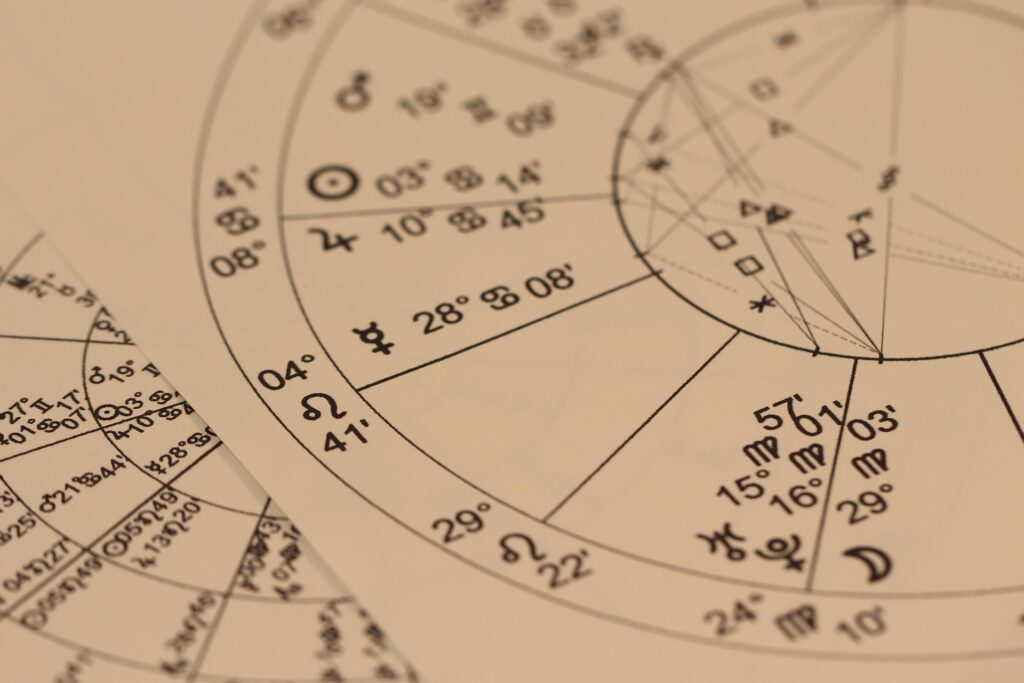
Have you ever met someone at exactly the right moment and felt like the meeting was somehow meant to happen? Maybe a stranger suddenly became an important part of your life, or a relationship appeared when you were going through a major transition. In astrology, experiences like these are often connected with the Vertex. The vertex in astrology is one of the more mysterious points in a natal chart. It is not a planet or asteroid, but a mathematical point that astrologers associate with fate, significant encounters, turning points, and experiences that can redirect the course of your life.
The Vertex becomes especially interesting in relationship astrology. When another person’s planet connects strongly with your Vertex, the relationship can feel unusually meaningful or difficult to ignore. This is one reason vertex in synastry is frequently discussed when people explore soulmates, fated love, and karmic relationships. However, the Vertex does not mean that every person who activates it is automatically your soulmate. Instead, a vertex connection can indicate that a person or experience arrives at an important point in your development and leaves a lasting impression.
What Is the Vertex in Astrology?
The Vertex is a mathematical point in your chart rather than a physical object in space. It is calculated using the relationship between the ecliptic and the prime vertical, and it is located on the western side of the chart. Because of its location, the Vertex is sometimes described as a point connected with experiences that come to us through other people or outside circumstances. This is different from many personal chart placements that describe qualities we consciously express ourselves.
The Vertex represents experiences that can feel unexpected, significant, or strangely well-timed. These experiences may include relationships, meetings, opportunities, challenges, or life events that change the direction you were originally taking. This is why astrologers often connect the Vertex with ideas such as fate, karmic experiences, fated events, and major turning points.
Is the Vertex a Planet?
No, the Vertex is not a planet.
It is a sensitive point in your birth chart that is calculated from your birth information. It does not have a physical body like Venus, Saturn, Jupiter, Uranus, Neptune, or Pluto. The Vertex is also connected to the anti-vertex. The two points sit opposite one another and create what astrologers call the vertex axis. The vertex is a mathematical point, which means its exact position depends heavily on accurate birth information. Your birth time is particularly important because changing the time can change the vertex degree and house placement.
Why Is the Vertex Considered Fated?
The Vertex is often associated with fate because its symbolism tends to involve experiences that feel as though they happened outside your normal plans. You may meet someone unexpectedly, receive an opportunity you never expected, move somewhere because of circumstances, or experience a relationship that changes your priorities. Looking back, you may feel that the event happened at exactly the right time. This does not necessarily mean that everything was predetermined.
In astrology, the Vertex is better understood as a symbolic point associated with significant timing and encounters. It can describe moments when circumstances seem to bring people or experiences into your life that encourage growth. The feeling of fate is often strongest when the Vertex is activated by transiting planets or strongly contacted by another person’s natal planet.
How to Find Your Vertex
If you want to find your Vertex, you can use a vertex calculator or a reliable birth chart calculator. You will normally need your:
- Date of birth
- Exact birth time
- Place of birth
After entering your information, your natal chart should show the Vertex, its degree, zodiac sign, and house. For example, your chart could show a Vertex at 15° Taurus in the 7th house. This tells you three important things. Taurus is the vertex sign, 15° is the vertex degree, and the 7th house is the house placement. If your birth time is uncertain, the Vertex may not be calculated accurately. For this reason, a reliable birth time is especially useful when studying the Vertex.
Vertex Sign and House Meaning
Your Vertex should not be interpreted by sign alone. The sign and house provide different parts of the story. The sign describes the qualities associated with your important encounters, while the house shows the area of life where those experiences are more likely to become noticeable. For example, someone with vertex in Taurus may experience important encounters involving stability, security, loyalty, money, comfort, and personal values. Someone with vertex in Leo may experience significant encounters involving romance, creativity, confidence, recognition, or self-expression. The house then gives additional context.
A Vertex in the 7th house can bring important relationship experiences, while a Vertex in the 10th house can connect major encounters with career and public life.
Vertex in Each House
Vertex in the 1st House
The 1st house is connected with identity, appearance, confidence, independence, and personal expression. A Vertex in this house may bring people or experiences that cause you to rethink who you are. A significant encounter can encourage you to become more confident or take a completely different approach to your life.
Vertex in the 2nd House
The 2nd house relates to money, possessions, security, personal values, and self-worth. Important encounters may change how you think about financial security or what you truly value. Someone may enter your life and help you understand your worth in a new way.
Vertex in the 3rd House
The 3rd house deals with communication, learning, siblings, writing, local travel, and information. A casual conversation could lead to a major opportunity. You may also encounter important people through school, social media, neighbors, short trips, or communication.
Vertex in the 4th House
The 4th house represents home, family, roots, ancestry, privacy, and emotional foundations. A significant person may affect your relationship with family or cause you to reconsider where you want to live and what home means to you.
Vertex in the 5th House
The 5th house is connected with romance, dating, creativity, children, entertainment, pleasure, and self-expression. With the Vertex here, romantic encounters can become particularly memorable. A creative project or passionate relationship may arrive at a moment when it changes your priorities.
Vertex in the 6th House
The 6th house relates to work, routines, responsibilities, service, and everyday habits. You may meet important people through work or daily activities. An encounter could also encourage you to completely reorganize your routine.
Vertex in the 7th House
The 7th house is strongly associated with partnerships, marriage, contracts, and one-to-one relationships. This placement can make relationship experiences especially significant. A person may enter your life and force you to reconsider what you want from partnership. A 7th house Vertex does not guarantee a fated relationship or marriage, but relationships may become important catalysts for personal development.
Vertex in the 8th House
The 8th house deals with intimacy, emotional vulnerability, shared resources, transformation, psychological depth, and trust. A Vertex here can correspond with powerful encounters that challenge you emotionally. Some relationships may encourage deep intimacy or force you to confront fears surrounding vulnerability and attachment.
Vertex in the 9th House
The 9th house represents travel, higher education, philosophy, spirituality, publishing, and different cultures. A major encounter could happen during travel or education. Someone may introduce you to a new belief system or completely change your understanding of the world.
Vertex in the 10th House
The 10th house relates to career, reputation, authority, ambition, and public life. A person you meet professionally could become an important mentor, employer, colleague, or business partner. A seemingly unexpected career event may redirect your professional path.
Vertex in the 11th House
The 11th house represents friendship, communities, social networks, groups, technology, and future goals. Important encounters may happen through friends or communities. A friendship could eventually become one of the most influential connections in your life.
Vertex in the 12th House
The 12th house is associated with spirituality, solitude, subconscious patterns, hidden emotions, compassion, and inner transformation. A Vertex here may bring experiences that are difficult to explain logically. Important encounters can encourage deeper self-understanding and emotional healing.
Vertex by Sign
Vertex in Aries
Vertex in Aries can bring encounters that encourage independence, courage, leadership, and action. A person may enter your life and push you to stop waiting for others and start making your own decisions.
Vertex in Taurus
Vertex in Taurus can emphasize stability, security, loyalty, material values, self-worth, and patience. Important people may teach you the value of consistency or help you understand what truly makes you feel secure.
Vertex in Gemini
Vertex in Gemini can bring significant experiences through communication, learning, information, and conversation. A simple message or unexpected conversation may become the beginning of an important chapter.
Vertex in Cancer
Vertex in Cancer can emphasize family, emotional security, home, belonging, and nurturing. Some encounters may make you rethink your emotional needs or teach you how to create a stronger sense of home.
Vertex in Leo
With vertex in Leo, important experiences may involve romance, creativity, confidence, recognition, and self-expression. Someone may enter your life and encourage you to become more comfortable being seen.
Vertex in Virgo
Vertex in Virgo can connect significant encounters with work, routines, responsibility, organization, service, and practical personal growth. A person may appear when you need to make important improvements in your daily life.
Vertex in Libra
Vertex in Libra can bring important relationship lessons involving balance, cooperation, equality, fairness, and partnership. Certain people may teach you what healthy compromise actually means.
Vertex in Scorpio
Vertex in Scorpio can intensify themes involving transformation, trust, emotional depth, vulnerability, and intimacy. Some encounters may feel powerful because they expose parts of yourself that you normally keep hidden.
Vertex in Sagittarius
Vertex in Sagittarius can bring significant experiences involving travel, education, freedom, philosophy, adventure, and personal beliefs. A person may enter your life and encourage you to explore a completely different direction.
Vertex in Capricorn
Vertex in Capricorn can connect important encounters with career, ambition, authority, responsibility, and long-term goals. A mentor or serious relationship may encourage you to become more disciplined and focused.
Vertex in Aquarius
Vertex in Aquarius can bring important people through friendships, communities, technology, unconventional environments, and social networks. An unexpected friendship may introduce you to a completely new lifestyle or way of thinking.
Vertex in Pisces
Vertex in Pisces can emphasize spirituality, compassion, imagination, creativity, intuition, and emotional sensitivity. Certain encounters may feel mysterious, emotional, or almost impossible to explain rationally.
What Is Vertex in Synastry?
Vertex in synastry is one of the most fascinating ways to study this point. Synastry compares two people’s natal charts and examines how their planets and sensitive points interact. When someone’s planet is closely connected with your Vertex, the relationship can feel unusually significant.
For example, if someone’s Venus conjuncts your Vertex, you may experience a strong romantic or affectionate attraction. If someone’s Sun conjuncts your Vertex, their personality and presence may have a powerful effect on your sense of identity and direction. A planet that conjunct vertex can become particularly noticeable because the conjunction is one of the strongest aspects in synastry.
Venus Conjunct Vertex
Venus conjunct Vertex is one of the aspects frequently discussed in romantic synastry. Venus represents attraction, affection, pleasure, relationships, beauty, and personal values. When one person’s Venus is conjunct the other person’s Vertex, the connection may feel naturally attractive and meaningful. The Vertex person may feel that the Venus person arrived at an important moment. The Venus person may also feel unusually drawn toward the Vertex person. This aspect can contribute to a fated love feeling, especially when supported by other strong synastry aspects.
However, Venus conjunct Vertex alone does not prove that two people are soulmates or that the relationship will last permanently.
Sun Conjunct Vertex
When someone’s Sun is conjunct your Vertex, their personality can become highly noticeable in your life. The Sun represents identity, vitality, confidence, and self-expression. The Sun person may encourage the Vertex person to see themselves differently or take a new direction.
This can create a strong vertex connection because the Sun person may become associated with an important period of personal development.
Moon Conjunct Vertex
The Moon represents emotions, security, instincts, memories, and emotional needs. When someone’s Moon conjuncts your Vertex, the emotional bond may feel familiar or unusually natural. The Vertex person may feel emotionally affected by the Moon person, while the Moon person may instinctively respond to the Vertex person. If other compatibility indicators support it, this aspect can contribute to a deeply emotional relationship.
Saturn Conjunct Vertex
Saturn conjunct Vertex can feel serious and significant. Saturn is associated with responsibility, commitment, boundaries, maturity, time, and long-term lessons. When Saturn is conjunct the Vertex in synastry, the relationship may feel important because it demands growth and responsibility. The connection may not always feel easy. Sometimes it can bring difficult lessons, obligations, or circumstances that force both people to mature. This is one reason Vertex contacts should not automatically be labeled as romantic. A Vertex connection can be meaningful without being comfortable.
Jupiter Conjunct Vertex
Jupiter conjunct Vertex can bring expansion, optimism, learning, travel, opportunity, and personal growth. The Jupiter person may introduce the Vertex person to new possibilities or help them see life from a wider perspective. This can be a positive influence, particularly when the relationship also contains supportive aspects involving Venus, Sun, Moon, or the Ascendant.
Uranus Conjunct Vertex
Uranus is associated with change, freedom, disruption, innovation, and unexpected events. When Uranus is conjunct the Vertex, an encounter may happen suddenly and change your plans. The relationship may feel exciting and unpredictable. Uranus can bring people into your life when you least expect them, making this combination particularly interesting when discussing fated encounters.
Neptune Conjunct Vertex
Neptune represents imagination, spirituality, sensitivity, idealism, dreams, and illusion. Neptune conjunct Vertex can create a powerful sense of emotional or spiritual connection. However, Neptune can also make it difficult to see a relationship objectively. The connection may feel magical at first, but idealization can become a problem if practical compatibility is ignored.
Pluto Conjunct Vertex
Pluto conjunct Vertex can be one of the more intense Vertex contacts. Pluto represents transformation, power, psychological depth, endings, rebirth, and profound change. When Pluto is conjunct your Vertex, the relationship may affect you at a very deep level. The encounter can expose hidden emotions, transform your understanding of intimacy, or push you through a major period of personal development. This is often the type of vertex relationship that people remember for years.
Vertex and the Ascendant
The Ascendant represents the way you approach life, your outward personality, and how you naturally interact with your environment. When one person’s planet or angle strongly connects with another person’s Vertex and Ascendant, the encounter can feel particularly noticeable.
For example, if someone’s Ascendant is closely conjunct your Vertex, their presence may immediately stand out to you. You may feel that they appeared at a significant moment in your life.
Vertex and the 7th House
Because the 7th house is connected with partnerships, the Vertex in this area often receives attention in relationship astrology. If your Vertex is located in the 7th house, important one-to-one relationships may play a major role in your personal development. If another person’s planet conjuncts your Vertex in the 7th house, the connection may feel especially relationship-oriented. Still, a complete synastry chart should always be examined before deciding whether a relationship has long-term potential.
Vertex and the 8th House
The 8th house adds a different kind of intensity. When the Vertex is in the 8th house or receives strong 8th-house synastry contacts, relationships may involve themes of intimacy, trust, emotional vulnerability, shared resources, psychological transformation, and deep attachment. A fated encounter connected with the 8th house can feel life-changing because it may force you to confront emotional patterns that you normally avoid.
Vertex and the 5th House
The 5th house is associated with romance, attraction, creativity, pleasure, dating, and self-expression. When the Vertex is connected with the 5th house, important romantic encounters may become a recurring theme. This placement can make certain relationships feel exciting, creative, passionate, and unforgettable.
What Does It Mean When the Vertex Is Activated?
The phrase “the Vertex is activated” usually means that an important transit or synastry contact is involving your Vertex. A natal planet can also strongly activate the Vertex through a close aspect. The most commonly discussed activation occurs when a transiting planet moves close to your natal Vertex.
For example, if Jupiter is transiting your Vertex, astrologers may watch for opportunities, expansion, travel, education, or significant social experiences. If Saturn is transiting your Vertex, serious responsibilities or relationship lessons may become more noticeable. If Uranus is transiting your Vertex, unexpected changes may occur. If Pluto is transiting your Vertex, deep transformation may become a major theme.
Transiting Your Vertex
When a planet is transiting your Vertex, the symbolism can become especially interesting. The exact meaning depends on which planet is involved.
- Jupiter may bring expansion and opportunity.
- Saturn may bring responsibility and long-term decisions.
- Uranus may bring sudden changes and unexpected encounters.
- Neptune may bring spiritual experiences or idealization.
- Pluto may bring transformation and intense psychological experiences.
The outer planet transits tend to be especially noticeable because they move more slowly and can remain close to a sensitive point for a longer period. However, astrology should not be used to predict a specific event with certainty. A transit describes a symbolic period of heightened themes rather than a guaranteed outcome.
Activated by Transiting Planets
When the Vertex is activated by transiting planets, you may notice that certain people or opportunities appear at unusually important moments. This does not mean that every transit will create a dramatic event. Sometimes the activation can be subtle. You may simply meet someone who changes your thinking, discover a new opportunity, make an important decision, or begin a process that becomes meaningful months later. The significance often becomes clearer when you look backward.
How Long Does a Vertex Activation Last?
The duration depends on the planet making the contact. Fast-moving planets such as the Sun or Moon can activate the Vertex for a relatively short period. Slower planets such as Saturn, Uranus, Neptune, and Pluto can create longer periods of influence. A transit becomes particularly interesting when the planet is very close to the exact Vertex degree and repeatedly contacts it because of retrograde motion.
Does the Vertex Mean Your Relationship Is Fated?
Not necessarily. The Vertex can indicate a fated encounter, but that does not automatically mean the relationship is destined to become permanent. A relationship can be highly significant without becoming a lifelong partnership.
For example, someone may enter your life and help you understand an important lesson before leaving. Another person may inspire a career change. Someone else may challenge your emotional patterns. The Vertex describes significance and timing more than guaranteed permanence.
Vertex and Soulmates
Many people associate the Vertex with soulmates because strong Vertex contacts can create a powerful sense of recognition. You may feel like you have known someone forever or that meeting them was strangely timed. But soulmate astrology should never rely on one placement. If you want to understand whether a relationship has strong long-term potential, look at the entire synastry chart and, when appropriate, synastry and composite charts. Consider Venus, Mars, the Sun, Moon, Ascendant, Saturn, the 7th house, 8th house, and other important chart connections. The Vertex is one piece of the puzzle.
Vertex Conjunct Natal Planets
Your natal chart may also contain a planet close to your Vertex. When a natal planet is conjunct the Vertex, that planet becomes part of your Vertex story. For example, a natal Venus conjunct Vertex can emphasize relationships, attraction, values, and social connections.
- A natal Saturn conjunct Vertex can emphasize responsibility, maturity, commitment, and serious life lessons.
- A natal Jupiter conjunct Vertex can emphasize expansion, opportunity, education, and growth.
- A natal Pluto conjunct Vertex can emphasize transformation and psychological depth.
The closer the planet is to the Vertex degree, the stronger astrologers generally consider the conjunction.
What Does the Anti-Vertex Mean?
The anti-vertex is the point directly opposite the Vertex. Together, the Vertex and anti-vertex create an axis. While the Vertex is often interpreted as experiences that come into your life through circumstances and other people, the anti-vertex is sometimes associated with your more familiar or self-directed patterns. Different astrologers interpret this axis in different ways, so the anti-vertex should be considered alongside the rest of the chart rather than treated as an absolute prediction.
Vertex Connection vs. Normal Attraction
Not every strong attraction is a Vertex connection. A powerful relationship can develop through Venus, Mars, Moon, Pluto, the 7th house, the 8th house, the Ascendant, or other synastry patterns. The Vertex becomes especially interesting when several indicators point toward the same theme.
For example, suppose someone’s Venus conjuncts your Vertex while their Sun also aspects your Moon and their Saturn connects with your Ascendant. That combination tells a much richer story than Venus conjunct Vertex alone. This is why experienced astrologers look at patterns rather than one isolated placement.
Signs of a Strong Vertex Connection
A strong Vertex connection may include several features in a synastry chart:
- A person’s Sun conjuncts your Vertex.
- Their Moon is closely connected to your Vertex.
- Their Venus conjuncts your Vertex.
- Their Mars forms a close aspect to your Vertex.
- Their Jupiter conjuncts Vertex.
- Their Saturn strongly aspects your Vertex.
- Their Uranus, Neptune, or Pluto makes a close contact.
- Their Ascendant connects with your Vertex.
- Your Vertex falls in their 5th, 7th, or 8th house.
- Multiple planets activate your Vertex.
The closer the aspect, the more attention astrologers usually give it.
Vertex in Synastry and Fated Love
Vertex in synastry can create the feeling that two people were brought together for a reason. One person may feel that the other appeared at exactly the right time. The relationship may begin unexpectedly or during a major transition. This can contribute to the experience of fated love. But remember that “fated” does not always mean “forever.”
Sometimes a fated relationship is about growth rather than permanence. A person may change your life without remaining in it permanently.
Vertex and Major Life Events
The Vertex is not limited to romance. It can also be connected symbolically with major life events involving career, friendship, travel, education, family, or personal transformation. For example, a Vertex transit could coincide with meeting a mentor, beginning a new career, moving to a new city, entering an important relationship, or making a decision that changes your future. This is why the Vertex can be useful when studying life events and turning points in a natal chart.
Vertex in Taurus, Scorpio, Leo, and Sagittarius
Certain Vertex signs receive frequent attention because of their strong symbolism.
- Vertex in Taurus can emphasize stability, loyalty, security, material values, and patience.
- Vertex in Scorpio can emphasize transformation, emotional intensity, trust, intimacy, and psychological depth.
- Vertex in Leo can emphasize romance, creativity, confidence, visibility, and self-expression.
- Vertex in Sagittarius can emphasize travel, education, freedom, exploration, philosophy, and expanding your worldview.
The meaning becomes more specific when the sign is combined with the house placement and the planets inspecting the Vertex.
Can a Vertex Transit Change Your Life?
A Vertex transit can coincide with a period that feels meaningful, but it should not be treated as a guarantee that something dramatic will happen. Astrology works best as a symbolic framework for reflection. If a transiting planet is conjunct your Vertex, pay attention to new people, opportunities, decisions, and circumstances that appear around that period. You may not immediately understand why something is important. Its significance can become clearer later.
Why Birth Time Matters So Much
Because the Vertex is calculated from the relationship between different chart factors, accurate birth information is essential. Your birth time determines the chart angles and the location of the Vertex. If the recorded birth time is significantly wrong, your Vertex house and degree may also be inaccurate. If you are researching vertex in synastry, both people’s birth times are especially useful. An inaccurate birth time can change the results of a synastry chart and may create misleading conclusions about Vertex contacts.
How to Calculate Your Vertex
The easiest approach is to use a reliable chart calculator. Enter your birth date, exact birth time, and birthplace. Once your chart has been generated, locate the Vertex symbol. Record the following:
- Vertex sign
- Vertex degree
- House placement
- Natal planets aspecting the Vertex
- Major transits to the Vertex
You can then compare this information with another person’s chart if you are exploring vertex in synastry.
The Vertex Is Also About Timing
One of the most fascinating aspects of the Vertex is timing. You may have certain natal placements throughout your entire life, but their importance can become more noticeable when a planet activates them through transit. Similarly, a person may enter your life at a moment when their natal planet conjuncts your Vertex. This can create the impression that the universe arranged the meeting. Whether you interpret this literally as fate or symbolically as meaningful timing, the Vertex offers an interesting way to explore why certain moments feel different from ordinary experiences.
Final Thoughts
The vertex in astrology is a fascinating sensitive point that can add another layer to your natal chart and relationship astrology. It is a mathematical point rather than a planet, but astrologers often use it to explore fated encounters, karmic experiences, turning points, and relationships that seem to arrive at significant moments. Your vertex placement can be understood through its sign and house, while transits can show periods when the Vertex is activated. In synastry, another person’s planet conjunct Vertex can create a particularly memorable connection, especially when supported by other strong chart contacts.
Whether you have Vertex in Taurus, Vertex in Leo, Vertex in Scorpio, or Vertex in Sagittarius, the most useful approach is to consider the complete chart rather than relying on one placement. The Vertex does not tell you exactly what will happen or guarantee a fated relationship. Instead, it can help you reflect on the people, experiences, and life events that appear to redirect your path.
Sometimes the most important encounters are the ones we never planned. The Vertex is one of astrology’s symbolic tools for exploring why those moments can feel so significant.